Subscribe:

Saturday, June 4, 2011

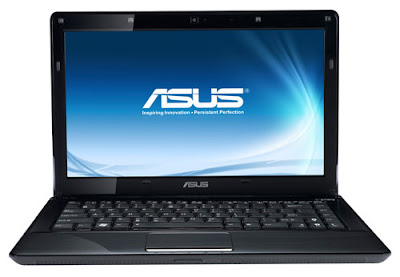
ASUS A42JR-VX062V / 14-inch Laptop review

ASUS A42JR-VX062V / 14-inch Laptop review
The ASUS A42JR-VX062V laptop comes equiped with a 14-inch (1366 x 768) display, Intel Core i5-430M 2.26GHz processor, 1GB ATI Radeon HD 5470 graphics, a 4GB of RAM, a 500GB hard drive, a 6-cell battery, Wifi and Bluetooth.ASUS A42JR-VX062V / 14-inch Laptop review


Specifications

CPU
Intel Core i5-430M (2.26GHz, 3MB L2 cache)
Chipset
INTEL HM55 Express chipset
Main Memory
4 GB DDR3
Graphic system
ATI Radeon HD 5470 (1GB DDR3)
Display
14 inch WXGA (1366×768)
HDD
500GB 7200RPM
Optical Disc Drive
DVD +/- RW Drive(DVD Writer Dual format,DL) come with docking expansion base
Wireless
IEEE 802.11 B/G/N
Bluetooth
Yes
Card Reader
4 in 1
Video Camera
1.3 MPixel
Finger Print
No
USB
3
D-sub/VGA
Yes
DVI
Yes
HDMI
Yes
Express Slot
No
e-SATA
No
Modem
No
LAN
Yes
Battery
6 Cell Li-Ion
OS
DOS Operating System
Warranty
2 Year Warranty
Weight
4.98 pounds (2.26 Kg.)
Price
$870.34

Source : [http://www.laptopspec.net]

Similar post :
Asus Eee PC 1000HE Notebook Review
Asus Eee PC 1015B and 1215B "New laptop Review"
Asus Laptops N73Jn with a dual core
Asus Launches New U30S Laptops Review
Asus G73JW-A1 Gaming Laptops

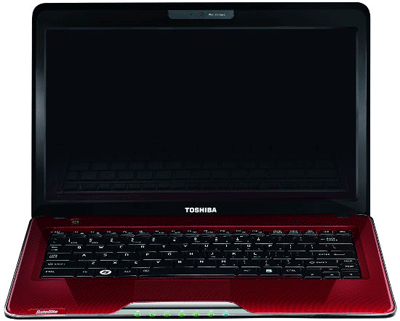
Toshiba Satellite T110-10Z / 11.6 inch Netbook review

Toshiba Satellite T110-10Z / 11.6 inch Netbook review
One of the lightest netbooks (1.58 kg) out there, arrived in the LaptopReviewShop office. We were a little skeptic about the Toshiba Satellite T110-10Z at first, as a 11.6 inch netbook with a 1.3 GHz Intel Pentium SU2700 processor is not quite the looker. But, after a few days of testing, we changed our opinion about the T110-10Z.

When it comes to design, the Satellite T110-10Z looks similar to its bigger brother, the Toshiba Satellite T130-10G. The red brings attention, without making it less elegant, while the modern textures make for a futuristic look.

The keyboard is simple, complete, with small ergonomic keys, while the touchpad has multitouch features, allowing you to use gestures in order to zoom and click, without your fingers leaving the touchpad.

Regarding connectivity, we can say that Toshiba T110-10Z impressed us when we noticed that it comes equipped with a HDMI port. Other than that, it also offers 3 USB 2.0 ports, a VGA port, an RJ-45 port, as well as headphone and microphone jacks and a DC-in port. The DC-in port is placed on the right, while the VGA port resides on the left. Oh, we almost forgot: it also comes with a 5-in-1 multimedia card reader.

The Satellite T110-10Z has an 11.6 inch display, with a resolution of 1366 x 768 pixels. Just like other netbooks and laptops of the Satellite family, this too uses a LED backlit display, making for better brightness and contrast as well as low power consumption.Toshiba Satellite T110-10Z / 11.6 inch Netbook reviewOn the inside

While today’s mobile processors have frequencies over 1.6 GHz and Turbo Boost technologies, the 1.3 GHz Intel Pentium SU2700 doesn’t say much. Many of you will say that 1.3 GHz is too little for basically anything. That’s what we thought too, but we were wrong.

The 1.3 GHz Intel Pentium SU2700 proved itself as a powerful chipset, even more powerful than an Intel Atom N450 which runs at 1.66 GHz, but a little slower than an Intel Core 2 Atom 330. It scored 2.8 in Windows 7 which is pretty impressive.

In other words, not only the frequency matters, but also the architecture on which the processor is built, therefore if you want to buy a laptop or netbook, don’t just look for the higher frequency, but rather try to find more info on the processor model.

Other than the 1.3 GHz Intel SU2700 processor the Satellite T110-10Z also packs 3 GB of RAM, Intel GMA 4500M graphics, and a 320 GB hard drive which runs at 5400 rpm.

Toshiba Satellite T110-10Z comes with Windows 7 Home Premium and with a series of useful programs: Toshiba Recovery Media Creator, Toshiba Photo Service, Microsoft Works, Microsoft Office Home and Student 2007 (60 day trial).

Performance

We used it for office apps, Internet, multimedia and even image processing. We also benchmarked it using 3D Mark 2006, and it scored 603 points which is great for a netbook. It didn’t have any problems running HD videos, no matter if they were YouTube videos or .avi videos. We also did some photo processing in Adobe Photoshop, nothing fancy of course but it did great.

Cooling and Autonomy

The cooler is silent even if it runs at its highest rpm, and given the fact that it keeps the CPU between 42 and 50 degrees Celsius, and the hard drive doesn’t exceed 35 degrees, we can says the cooler does a pretty good job, and you won’t have problems with overheating.

Concerning autonomy, the six-cell battery can power the 110-10Z for about 6-7 hours of normal use. On the official Tosh site you will find the autonomy to be almost 9 hours, but it all depends on the way you use it. We used it for music, browsing the Internet and running office apps, while the display brightness was set to 100%.Toshiba Satellite T110-10Z / 11.6 inch Netbook reviewWrap-up

We recommend the Toshiba Satellite 110-10Z to all of you who are on the move and want performance and mobility. As we said, it’s great for running office apps, multimedia apps, browsing the Internet and even some basic image editing, but because of the small display, it tends to become exhaustive, especially if you are watching a movie. Because of its size (286 x 211 x 24.9 – 37.6 mm) and its weight (1.58 kg), it offers great portability, while the technical specs make it stand out from the crowd.[/laptopreviewshop.com]

Similar post :
Toshiba Satellite L-Series with 3D Webcams
Toshiba Satellite L655-178/15.6 inch Laptops Review
Toshiba Satellite M55-S141 14" Laptop Review
Toshiba Dynabook is a Moody Chameleon Review
Toshiba mini NB205 (NB205-N210) Notebook Review

Friday, June 3, 2011

Acer Aspire 8481 / 14-inch Ultra Slim Laptop review

Acer Aspire 8481 / 14-inch Ultra Slim Laptop review
Acer, one of the leading manufacturer of the IT products such as Laptop, Netbooks, etc has let out a new ultra slim laptop named as Acer Aspire 8481. This latest notebook is bestowed with the elevated specifications and is built with a 8.9″ WSVGA high-brightness Acer CrystalBrite TFT LCD display having 1024 x 600 pixels of display resolution. The device supports for 262,000 colors, runs on Linpus Linux Lite version/Windows XP Home Premium Operating System and is powered by Intel Atom processor N270. The device comes equipped with Mobile Intel 945GSE Express Chipset, Single channel with onboard SDRAM and one soDIMM slot, hard drive space up to 320GB and lots more. In an addition the device is provided with a 84-key keyboard with 1.6 mm (minimum) key travel and a Touchpad pointing device with two buttons. Stay on with the read to have the later details related to the specifications of the device.


Specifications of Acer Aspire 8481 Laptop :

  • 8.9″ WSVGA high-brightness Acer CrystalBrite TFT LCD display
  • 1024 x 600 pixel screen resolution
  • 262,000 colors support
  • Runs on Linpus Linux Lite version/Windows XP Home Premium OS
  • Powered by Intel Atom processor N270
  • Mobile Intel 945GSE Express Chipset (DDR2 400/533 MHz)
  • Mobile Intel 82801GBM Chipset
  • Equipped with 0.3 megapixel Web-camera
  • Single channel with onboard SDRAM and one soDIMM slot
  • DDR2 533 MHz SDRAM memory
  • Up to 320GB of hard drive space
  • NAND flash module of 8 GB
  • NVIDIA GeForce GT520M
  • Storage expansion of SD Card reader
  • Multi-in-1 card reader
  • SD Card reader for storage expansion
  • Three USB 2.0 ports
  • External display (VGA) port
  • Headphone/speaker/line-out jack
  • Microphone-in jack
  • Ethernet (RJ-45) port
  • DC-in jack for AC adapter
  • 10/100 Mbps Fast Ethernet LAN
  • Wi-Fi & BluetoothAcer Aspire 8481 / 14-inch Ultra Slim Laptop review
The Acer Aspire 8481 Laptop includes a Multi-in-1 card reader that supports Secure Digital (SD) Card, MultiMediaCard (MMC), Reduced-Size Multimedia Card (RS-MMC), Memory Stick (MS), Memory Stick PRO (MS PRO), xD-Picture Card (xD) as well supports for storage cards with adapter such as miniSD, microSD, Memory Stick Duo, Memory Stick PRO Duo. It supports for Multimedia functions such as High-definition audio, Two built-in stereo speakers, MS-Sound, Built-in digital microphone. This notebook is powered by 24 W 2200 mAh 3-cell Li-ion battery / 57 W 2600 mAh 6-cell Li-ion battery pack that provides for 3hrs and 7hrs of battery life respectively. The device measures Width of 190mm, Height of 240mm and Thickness of 13.7mm and weighs about approximately 740 grams. It comes with a One-year International Travelers Warranty (ITW).[www.priceindia.org]

Similar post :
Acer AS5742-7120 New Laptop Review
Acer Aspire 4540-522G32Mn Laptop Review

NVIDIA launches Wired 3D Vision Glasses"computex 2011"

NVIDIA launches Wired 3D Vision Glasses
Technically Computex 2011 doesn’t start for another day, but already companies are announcing new hardware right ahead of the event in order to try to beat the rush. NVIDIA is one of those companies; at Computex they’re announcing their new wired 3D Vision glasses.

As a bit of background, since the introduction of 3D Vision in 2009 the hardware has remained relatively unchanged. NVIDIA launched with their wireless 3D Vision glasses kit at $199; more recently they dropped the price down to $149, but other than a slightly tweaked revision of the glasses offering double the battery life, the glasses themselves haven’t changed. Meanwhile, though wireless glasses are generally going to be the best way to use an active shutter 3D system, it does have a couple of downfalls: there’s only so much cost cutting that can be done, the need to have batteries and USB connectors on-board dictates design to some degree, and $150 objects that are not tied down tend to grow legs and walk away.

As the market for 3D Vision expands, driven by declining prices for the necessary 120Hz LCD monitors, NVIDIA has finally had to deal with these problems, both to keep costs in-line with cheaper monitors and to build a set of glasses suitable for some new markets. The result is that we’ve come full-circle: 3D shutter glasses are now wired once again.

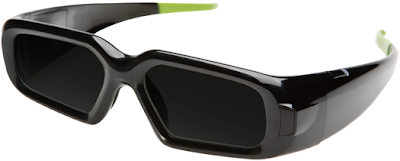
Being announced today and shipping in late June are the NVIDIA 3D Vision wired glasses, which NVIDIA intends to fill the above niche. As the name implies, it’s a set of 3D vision glasses that are wired – in this case using USB 2.0 – instead of the wireless glasses + hub solution that NVIDIA’s wireless kit uses. By ditching the batteries and the IR gear, and by integrating the functions of the 3D Vision hub into the USB connector itself, NVIDIA has been able to cut production costs. Priced at $99, these are intended to be the new low-end glasses to go with the aforementioned cheaper 120Hz monitors, while the wireless glasses will continue to be offered at $149. Besides the fact that the wireless glasses are wireless, it looks like the other features differentiating the two will be the 3D Vision control functionality the wireless hub offers - convergence controls and turning 3D Vision on & off - as there's no analog on the wired glasses.

The wired glasses will also be serving as NVIDIA’s first official foray into LAN/cyber-café business. As wireless glasses can’t be easily secured and can be easily stolen, NVIDIA designed and will be pitching the wired glasses as a practical alternative to café owners that want to offer 3D Vision without their investments walking out the door. The wired glasses feature a Kensington lock slot in the USB connector/hub, which means the glasses can be locked down like the rest of a café’s hardware. We wouldn’t venture to guess just how many cafes are actually interested in offering 3D Vision right now, but clearly NVIDIA believes it’s a worthwhile market to chance.NVIDIA launches Wired 3D Vision Glasses
The existing wireless glasses

Finally, in spite of the wired nature of the glasses, they may end up being more comfortable than the existing wireless glasses. NVIDIA isn’t heavily promoting it, but the wired glasses do have a different fit thanks to the fact that there’s no longer a need to embed batteries, IR receivers, or a controller into the glasses themselves. Of the few different editors here at AnandTech that have used the wireless 3D Vision glasses, the most common complaint is the fit; as the glasses are one size fits all, we’ve found that the glasses pinch our (apparently) big heads. Although only NVIDIA really has any data to back up how many users shy away from 3D Vision due to the fit of the glasses, we suspect we’re not the only ones that the existing glasses poorly fit – the merits of the technology mean little if the glasses themselves can’t be worn comfortably for any length of time. Once we receive our sample glasses we’ll be taking a look at the fit to see if these are any better than the wireless glasses.

Wrapping things up, the wired glasses will cost $99 and be shipping in late June from NVIDIA and other retailers. NVIDIA hasn’t talked about any long-term plans for the wired glasses, but we wouldn’t rule out the possibility that they’re going to replace the wireless glasses in monitor bundles that already include glasses. A few manufacturers are building the IR transmitter directly into the monitor’s bezel these days, but for the rest this would be another way to bring down the price of a complete 3D Vision kit.[www.anandtech.com]

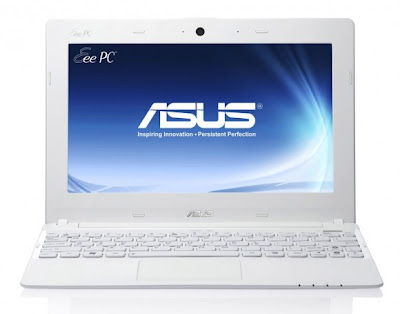
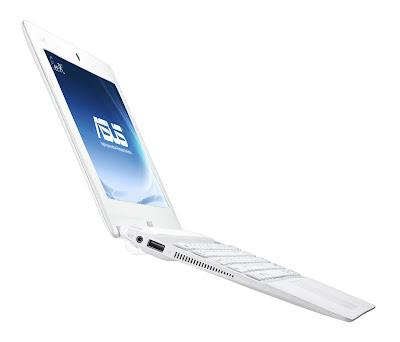
ASUS Eee PC X101 / 10.1-inch Netbook review

ASUS Eee PC X101 / 10.1-inch Netbook review
ASUS is preparing a new surprise for us – the Eee PC X101 netbook model. Launched at the Computex 2011, it seems to be described as the perfect ultraportable for any modern mobile user. But if you think about a list of full specs, we tell you from the start that it is too soon and you have to wait for a while. Many of its features are not very clear at this moment, but if you continue to read you’ll certainly find all the useful available informations about it.

What we know for sure is that ASUS Eee PC X101 is equipped with a 10.1-inch display with a resolution of no less than 1024 x 600 pixels, or a 1.5GHz Atom Z670 single-core processor with GMA 600 integrated graphics. You’ll have more flexibility than ever as long as this netbook model gives the possibility to choose between Windows 7 or MeeGo OS.

Above all these, we have, present as always, some connectivity features such as 802.11b/g/n Wi-Fi. And let’s not forget the fact that it includes two USB ports, a headphones socket, dual microphones, a webcam or a chiclet keyboard. From the memory point of view, ASUS didn’t offered any informations, but it lets us know that we won’t have any reason to complain about its hard drive or solid state drive.

There are also rumours about three color options – white, red and gold. If you are interested to find a few numbers about the portability, we can tell you that is expected to weight even under 1kg or to have only 17.6mm in thickness. And there are plenty of pictures with this new ASUS Eee PC X101 in order to decide if it fits your interests or not. You’ll be able to take advantage of these capabilities and probably many others for a price starting from $199, but there’s no word about the availability date. But don’t worry, we will keep you updated with all the new details as they are starting to appear.ASUS Eee PC X101 / 10.1-inch Netbook reviewHardware details:
  • Intel Atom Processor (N435 at 1.33 Ghz), assumed to be Oaktrail
  • 10.1 inch matte display, with a resolution of 1024 x 600
  • 802.11b/g/n WiFi
  • 2 x USB ports, microSD card slot, headphone / audio port.
  • 2600 mAh / 28 Wh battery
  • Weight: 950g
  • Thickness: 17.6mm
Source : [www.blugga.com]

Similar post :
Asus Eee PC 1000HE Notebook Review
Asus Eee PC 1015B and 1215B "New laptop Review"
Asus Laptops N73Jn with a dual core
Asus Launches New U30S Laptops Review
Asus G73JW-A1 Gaming Laptops


Wednesday, June 1, 2011

Asus G53sw A1 / 17.3-inch Gaming Laptop Review

Asus G53sw A1 / 17.3-inch Gaming Laptop Review
ASUS has shrunk down its popular 17.3-inch G73 gaming notebook into a more manageable 15.6-inch size with the introduction of its G53SW. Is this travel-friendly gaming laptop as impressive as its bigger brother? We find out.

The G53 packs a punch, especially with the second-generation Intel Core i7 quad-core processor, 8GB of RAM, and its powerful Nvidia GTX 460M graphics card with a whopping 1.5GB of its own memory. The two-year warranty with one year of accidental damage protection is also worth noting; most competitors do not offer this kind of coverage standard.

Build and Design
The G53SW is essentially a shrunken version of ASUS’ larger and extremely popular 17.3-inch G73JH and G73JW gaming notebooks. The notebook’s design imitates a stealth bomber aircraft, especially the rear with its recessed and upward-angled cooling exhaust ports. The G53SW is quite unique; the only notebooks that likely get more attention from onlookers are Alienware laptops.

Most of the G53SW’s touchable surfaces are covered in a rubber finish, which feels great and adds to the long-term durability. The notebook is appreciably absent of glossy plastic. The G53SW is constructed entirely of plastic. The plastic is reasonably thick and does not make a cheap sound when tapped by a fingernail. The chassis is acceptably stiff but can be flexed by twisting the corners. The areas around the chassis are solid though cave in slightly under pressure.

The lid is attached the chassis via one large hinge. It is possible to open the lid with one hand. The lid flexes rather easily; additionally, the hinge could be a bit more supportive since the display can move around a bit. I also wish the display tilted back further. Fit and finish is good; there are no rough or unfinished edges. The overall build quality is above average; the lid could be sturdier, but otherwise there are no concerns.

Upgrading the G53SW is possible but not easy. Accessing the RAM and hard drive requires removing the keyboard, the palm rest, and several screws; then the bottom panel will pop off. The G53SW actually has two hard drive bays, though most configurations only come with a single drive.


Ports and Features
The G53SW has an average amount of ports for a 15.6-inch notebook; a larger variety would be appreciated. It lacks an ExpressCard slot and eSATA. All picture descriptions are left to right.Asus G53sw A1 / 17.3-inch Gaming Laptop Review ASUS G53SW-A1 specifications:

  • 15.6-inch 1080p (1920×1080) glossy panel with LED backlighting
  • Intel “Sandy Bridge” Core i7-2630QM quad-core processor (2.0GHz~2.9GHz Turbo Boost, 6MB cache, 45W TDP)
  • Intel HM65 chipset
  • Nvidia GeForce GTX 460M graphics w/ 1.5GB GDDR5 dedicated memory
  • 8GB DDR3-1333 dual-channel RAM (2x 4GB, supports up to 16GB – 4x 4GB)
  • 750GB 7200RPM Seagate hard drive (ST975042AS)
  • Atheros AR9002WB-1N wireless network adapter
  • Integrated Bluetooth wireless
  • DVD burner (HL-DT-ST DVDRAM GT34N)
  • 8-cell li-ion battery (14.4V, 5200mAh, 74Wh)
  • 1x USB 3.0 port
  • Backlit chiclet keyboard
  • Weight: 8.1 lbs.
  • Dimensions: 15.5 x 11.75 x 2.13 inches
  • Two-year warranty with one-year accidental damage protection
  • MSRP: $1,499
[via]

Similar Post :
ASUS Eee PC 1000HE Notebook Review
Asus Launches New U30S Laptops Review
Asus Eee PC 1015B and 1215B "New laptop Review"
ASUS G73JW-A1 Gaming Laptops

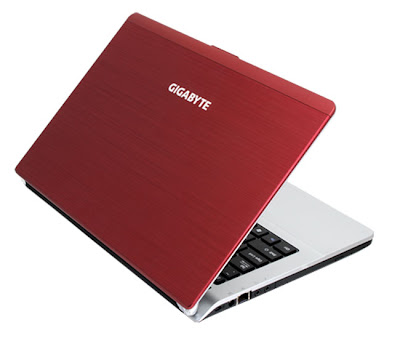
New Gigabyte booktop m2432 / 14-inch Notebook review

New Gigabyte booktop m2432 / 14-inch Notebook review
Gigabyte also introduces at computex 2011 the latest colorful design and feature based m2432 notebook so which comes with 14-inch display screen and other elegant features just like aluminum hairline brushed cease that provides in either ruddy or silver. It’s new booktop m2432 notebook is built in 1.81kg light weight so you can very easily use it anyplace that means it is best and perfect for journey.

Gigabyte Booktop M2432 Notebook Features:
  • Intel’s sandy bridge 2nd core i5 processor
  • Intel hd 3000 graphics
  • THX trustudio pro technology
  • 14-inch 1366×768 led-backlit lcd displays
  • NVIDIA GeForce GT440 GPU with 1GB video reminiscence
  • plus six USB ports, D-Sub, HDMI, DVI, and other helpful ports

There is no other information are still accessible about its availability and costing, but I like these, booktop m2432 notebook.[http://laptop-blog.info/]